Russell Brand found guilty of rape and three sexual assaults
A Southwark Crown Court jury convicted him on four counts and acquitted him on three; he was remanded in custody ahead of sentencing.
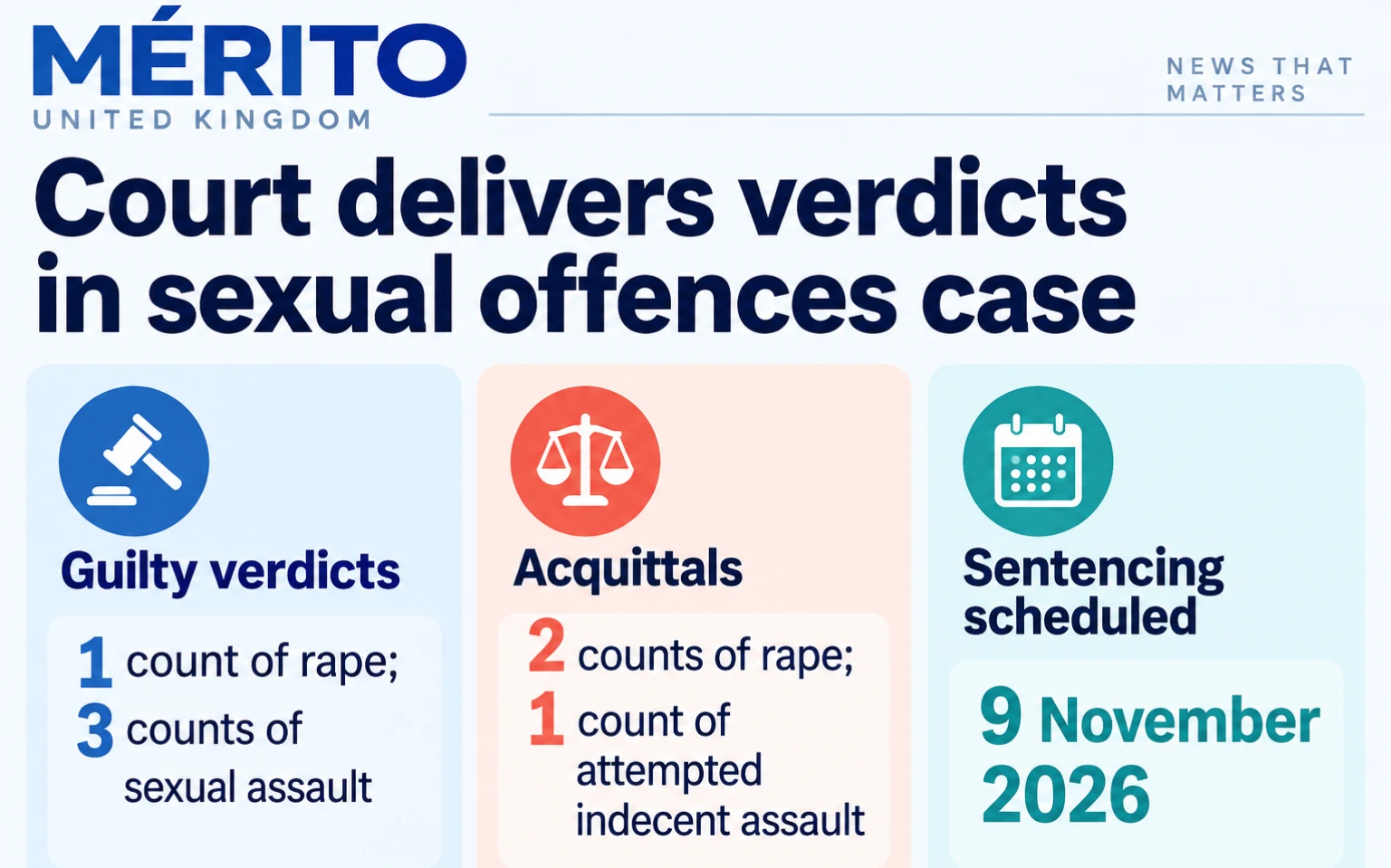
On 5 November 2026, a jury at Southwark Crown Court found Russell Brand guilty of one count of rape and three counts of sexual assault. He was acquitted of two other rape charges and one count of attempted indecent assault. The judge remanded him in custody and said he faced a custodial sentence of some length, with sentencing scheduled for 9 November. Separate police inquiries into rape allegations made by two other women remained ongoing.
The jury returned four guilty verdicts and three acquittals on 5 November 2026. Sentencing was scheduled for 9 November.
Verdict at Southwark Crown Court
On 5 November 2026, a jury at Southwark Crown Court found Russell Brand guilty of one count of rape and three counts of sexual assault. He had denied the charges. The verdict followed a trial involving seven charges concerning six women, with allegations spanning 1999 to 2009.
The jury acquitted Brand of two counts of rape and one count of attempted indecent assault. The outcome therefore resolved the seven charges tried in this case; it does not determine allegations outside the trial.
Custody and sentencing timetable
After the verdict, Mr Justice Bennathan said Brand faced a custodial sentence of some length and remanded him in custody. The judge scheduled sentencing for 9 November 2026. These were the arrangements announced after the verdict; this account does not state a later sentencing outcome.
Separate inquiries remain unresolved
The Metropolitan Police said separate investigations into rape allegations made by two further women were continuing. Police said case files concerning both complainants had been submitted to the Crown Prosecution Service. These matters are separate from the charges decided by the jury and remain allegations under investigation, not findings in this trial.
Explore the background
Further reading
Selected background resources to explain the context and concepts behind this story.
Understand the statutory role and independence of the Crown Prosecution Service in England and Wales.
About CPS - The Crown Prosecution Service
The article mentions the Crown Prosecution Service in the context of ongoing investigations and prosecution. This official profile explains the CPS's function as the independent prosecuting authority, helping readers understand the institutional framework behind the legal proceedings described.
Learn how the criminal justice system processes cases of rape and serious sexual assault in England and Wales.
A guide for victims of rape and serious sexual assault
This guide from the CPS explains the steps involved in reporting and prosecuting sexual offences. It provides context on the legal definitions and procedural stages that underpin the trial and sentencing mentioned in the news.
Identify the legal classification and sentencing categories for sexual assault offences under the Sentencing Code.
Practice Direction on Listing in the Criminal Courts
The article notes that the judge indicated a custodial sentence of 'some length' would follow. This judiciary practice direction outlines how sexual assault is categorized within the criminal courts, offering insight into the legal standards applied in such cases.
Understand the joint guidance for police and prosecutors on investigating and prosecuting rape allegations.
INVESTIGATING AND PROSECUTING RAPE
This document from the College of Policing details the procedural standards for handling rape cases. It helps readers understand the investigative and evidential requirements that police and the CPS must meet, providing background on the 'separate police inquiries' mentioned in the article.
External links selected for their educational value. They are separate from the sources used to report this story.
Editorial transparency
Article integrity
These checks apply to the published version. Changes to its content or evidence require a fresh review.
Veracidad
Aprobado
Comprueba que la pieza tenga fuentes declaradas y verificadas, que el nivel de evidencia se presente correctamente y que el desarrollo sea suficiente para sostener sus afirmaciones.
100/100
Analizado 07/11/2026 02:38 · rules-v1
Ausencia de sesgo
Aprobado
Busca lenguaje emocional, descalificaciones, generalizaciones absolutas y una voz editorial impropia de una noticia. También comprueba atribuciones y pluralidad de fuentes cuando la materia es sensible.
100/100
Analizado 07/11/2026 02:38 · rules-v1
Ausencia de clickbait
Aprobado
Evalúa si el titular cuenta el hecho principal sin ocultarlo para provocar curiosidad, sin promesas exageradas y sin recursos tipográficos engañosos.
100/100
Analizado 07/11/2026 02:38 · rules-v1
Coherencia editorial
Aprobado
Contrasta titular, subtítulo, resumen y cuerpo para detectar contradicciones, cifras sin respaldo o un alcance mayor del que permite la información disponible.
100/100
Analizado 07/11/2026 02:38 · rules-v1
Plagio y originalidad
Aprobado
Compara la prosa con los extractos de las fuentes utilizadas y con hasta 250 publicaciones recientes de Mérito para detectar copia extensa o una reescritura demasiado cercana.
100/100
Analizado 07/11/2026 02:38 · rules-v1
Conflictos de interés
Aprobado
Analiza posibles relaciones entre la autoría, el medio y las fuentes, así como patrocinio, lenguaje promocional o dependencia exclusiva de comunicados de prensa.
100/100
Analizado 07/11/2026 02:38 · rules-v1
The score is a quality-control indicator, not a probability that something is true.