False nuclear and hazard alerts sent through Ukrainian and Russian emergency apps
Authorities in both countries said their mobile warning services were compromised; the perpetrators and any link between the incidents remain unknown.
False warnings, including claims of radiation, chemical and nuclear threats, appeared through emergency alert apps in Ukraine and Russia. Officials said the wider alert systems remained operational.
Officials described false messages in both countries’ apps and said wider public warning channels remained available.
False warnings appeared in Ukraine’s alert app
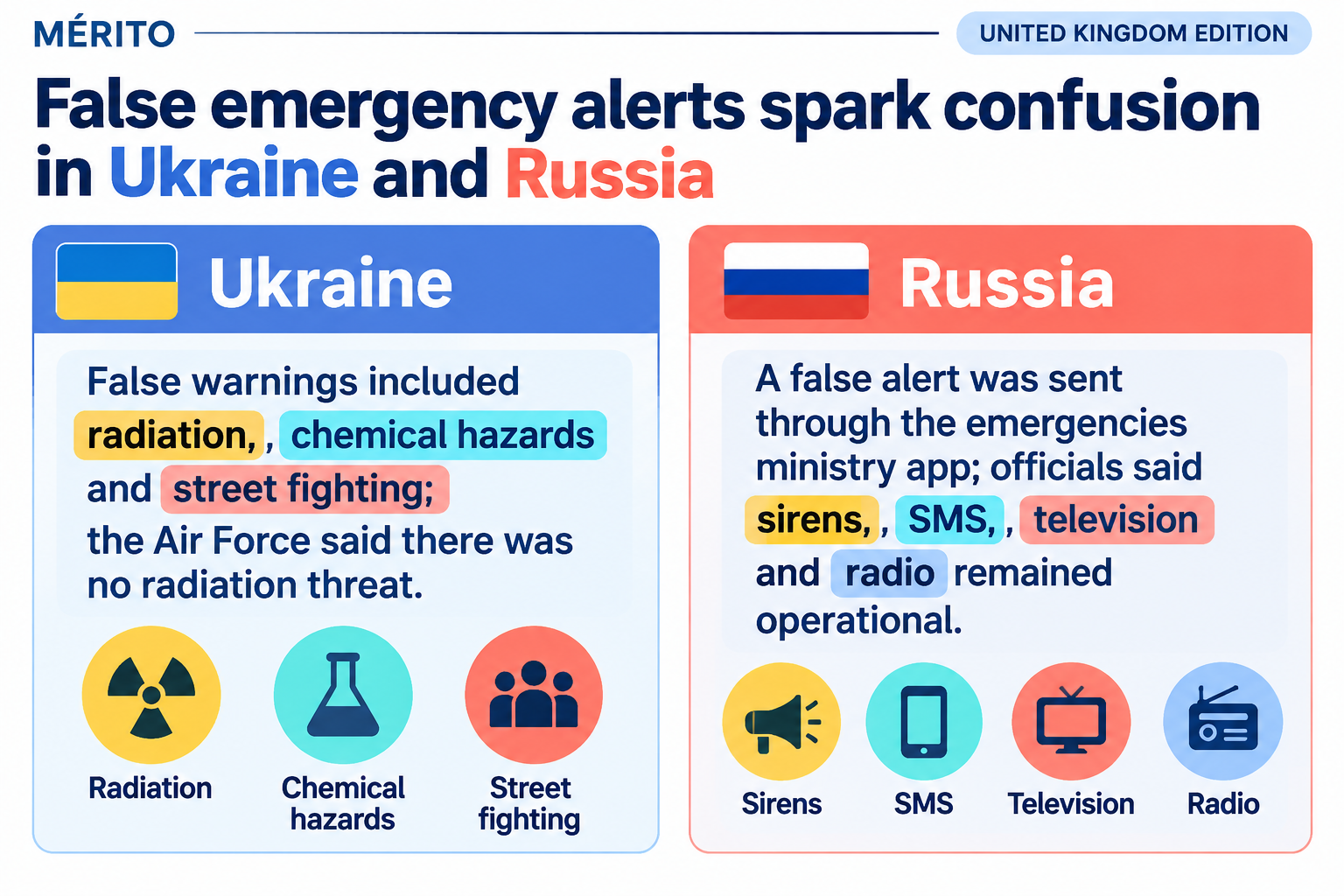
Ukraine’s Air Alert app carried false warnings of radiation, chemical hazards and street fighting, including messages seen by residents in Kyiv. The Ukrainian Air Force said the app had probably been subjected to hostile interference and stated that there was no radiation threat.
Ukraine’s government temporarily disabled the app after saying it appeared to have been compromised. The Air Force and other officials urged residents to use official channels for genuine warnings. A spokesperson for the Air Force said the app was separate from military command systems and that the incident did not affect security and defence operations.
Accounts of the service’s recovery described different stages, so its precise operational status is not stated here. The identity of those responsible for the compromise has not been established.
Russia’s ministry reported a separate app incident
Russia’s Ministry of Emergency Situations said its mobile app had been used to send false information to the public. The ministry reported that a false alert reached 33 regions and said it had identified the vulnerability involved.
The ministry said the incident did not affect the country’s wider warning system, which it described as operating through sirens, loudspeakers, text messages, television and radio. It did not identify who was responsible for the app compromise.
The available accounts do not establish whether the Russian and Ukrainian incidents were connected. Kremlin spokesperson Dmitry Peskov said Russian government internet resources faced continuing cyber threats, but did not identify a perpetrator in this incident.
Explore the background
Further reading
Selected background resources to explain the context and concepts behind this story.
Understand the legal framework and definitions governing cybersecurity in Ukraine.
Article 1. Definition of Terms
This document provides the official legal definitions and foundational laws for cybersecurity in Ukraine, helping readers understand the regulatory context in which the alert systems operate.
Learn about the types of cyberweapons and threats used in the context of the conflict in Ukraine.
Introduction
The OSCE report offers an educational overview of cyber threats and weapons, providing technical context for how digital infrastructure, including alert systems, can be targeted.
Review the historical role and international activities of Russia's Ministry of Emergency Situations.
A/58/PV.37 General Assembly
This UN record documents the historical humanitarian and emergency response activities of the Russian ministry, offering background on the organization mentioned in the news.
Analyze how the Russia-Ukraine conflict impacts national risk assessments in the UK.
National Risk Register - 2025 edition
The UK's National Risk Register provides an official perspective on how the war affects critical infrastructure and security, offering a broader geopolitical context for the incident.
External links selected for their educational value. They are separate from the sources used to report this story.
Editorial transparency
Article integrity
These checks apply to the published version. Changes to its content or evidence require a fresh review.
Veracidad
Aprobado
Comprueba que la pieza tenga fuentes declaradas y verificadas, que el nivel de evidencia se presente correctamente y que el desarrollo sea suficiente para sostener sus afirmaciones.
100/100
Analizado 02/11/2026 15:33 · rules-v1
Ausencia de sesgo
Aprobado
Busca lenguaje emocional, descalificaciones, generalizaciones absolutas y una voz editorial impropia de una noticia. También comprueba atribuciones y pluralidad de fuentes cuando la materia es sensible.
100/100
Analizado 02/11/2026 15:33 · rules-v1
Ausencia de clickbait
Aprobado
Evalúa si el titular cuenta el hecho principal sin ocultarlo para provocar curiosidad, sin promesas exageradas y sin recursos tipográficos engañosos.
100/100
Analizado 02/11/2026 15:33 · rules-v1
Coherencia editorial
Aprobado
Contrasta titular, subtítulo, resumen y cuerpo para detectar contradicciones, cifras sin respaldo o un alcance mayor del que permite la información disponible.
100/100
Analizado 02/11/2026 15:33 · rules-v1
Plagio y originalidad
Aprobado
Compara la prosa con los extractos de las fuentes utilizadas y con hasta 250 publicaciones recientes de Mérito para detectar copia extensa o una reescritura demasiado cercana.
100/100
Analizado 02/11/2026 15:33 · rules-v1
Conflictos de interés
Aprobado
Analiza posibles relaciones entre la autoría, el medio y las fuentes, así como patrocinio, lenguaje promocional o dependencia exclusiva de comunicados de prensa.
100/100
Analizado 02/11/2026 15:33 · rules-v1
The score is a quality-control indicator, not a probability that something is true.