
Reduced assistance in Gaza
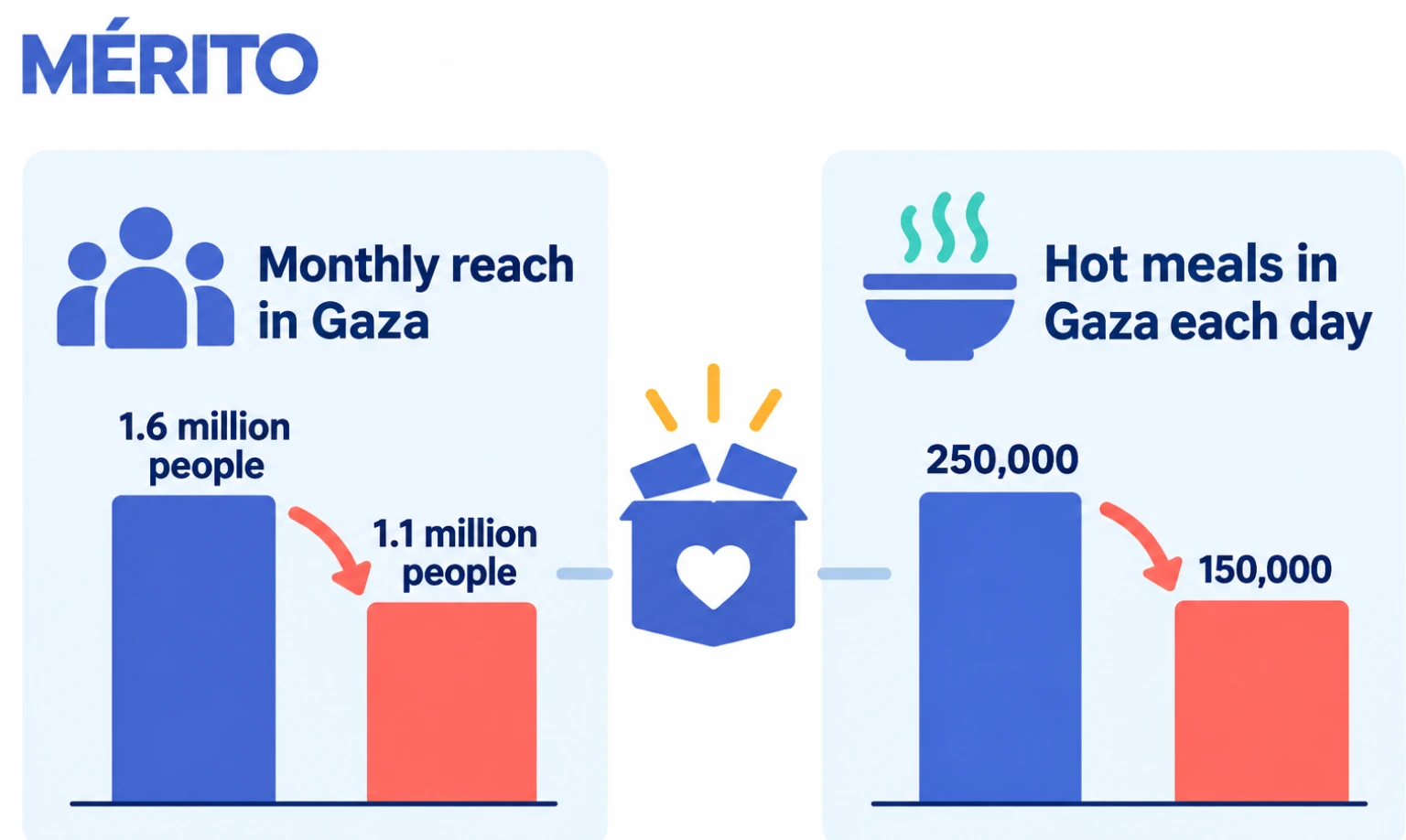
Funding shortfalls led the World Food Programme (WFP) to reduce the number of people it reaches in Gaza each month from 1.6 million to 1.1 million. WFP says food assistance in Gaza has been cut by around one-third. The changes affect food parcels, cash support and meals provided through community kitchens.
Daily hot meals fell from 250,000 to 150,000. In hard-to-reach areas, including locations near the Yellow Line, families were to receive a hot meal every other day rather than daily. WFP also reduced the value of cash assistance for 75,000 families.
WFP says families receiving food assistance will get one parcel instead of two, along with a smaller bag of wheat flour. The programme continues to support bakeries that provide about one-third of Gaza’s bread needs, nutrition assistance for women and children, and food snacks for children.
The agency says it is continuing nutrition support for more than 320,000 pregnant and breastfeeding women and young children, and fortified snacks for more than 300,000 children across temporary learning spaces. These services are separate from the reductions to food parcels, cash assistance and community-kitchen meals.
Families described relying on food assistance and having to adapt meals to what was available. A displaced mother quoted in a report said her family sometimes waited for community-kitchen meals; another said the portions had already been too small to feed the household. WFP’s Palestine director said the reductions were driven by funding, not by a decline in need.
Assistance in the West Bank and funding needs
In the West Bank, the number of people receiving WFP assistance fell from 400,000 to 200,000 in September. WFP estimates that 900,000 people there are food insecure, with violence, displacement and economic hardship contributing to pressure on households.
WFP said it needed US$450 million for critical operations in Gaza and the West Bank through March 2027. This is a funding requirement to continue assistance, not money already secured. The agency’s operational information says it supports people in the West Bank through cash assistance, food and voucher distributions, livelihood programmes and nutrition support.
Food insecurity and household pressures
WFP estimates that 1.4 million people in Gaza, about two-thirds of the population, face crisis or worse levels of acute food insecurity. It describes recent improvements in food security as fragile and says families remain highly vulnerable to hunger.
Household accounts describe the strain of reduced food support. One family said it had to plan meals around what was available; another described difficulty feeding children and relying on assistance. These accounts reflect individual experiences, while WFP’s estimates describe the wider food-security situation.
WFP says that around 80% of people in Gaza are unemployed and many cannot afford a nutritious diet. Its operational information also describes repeated displacement, damaged homes, poor sanitation and limited access to safe water as factors leaving families vulnerable.