England launches rail campaign as councils gain powers to penalise bus nuisance
The rail initiative encourages headphone use; local authorities can set bus rules carrying fixed penalties of up to £100, subject to approval.
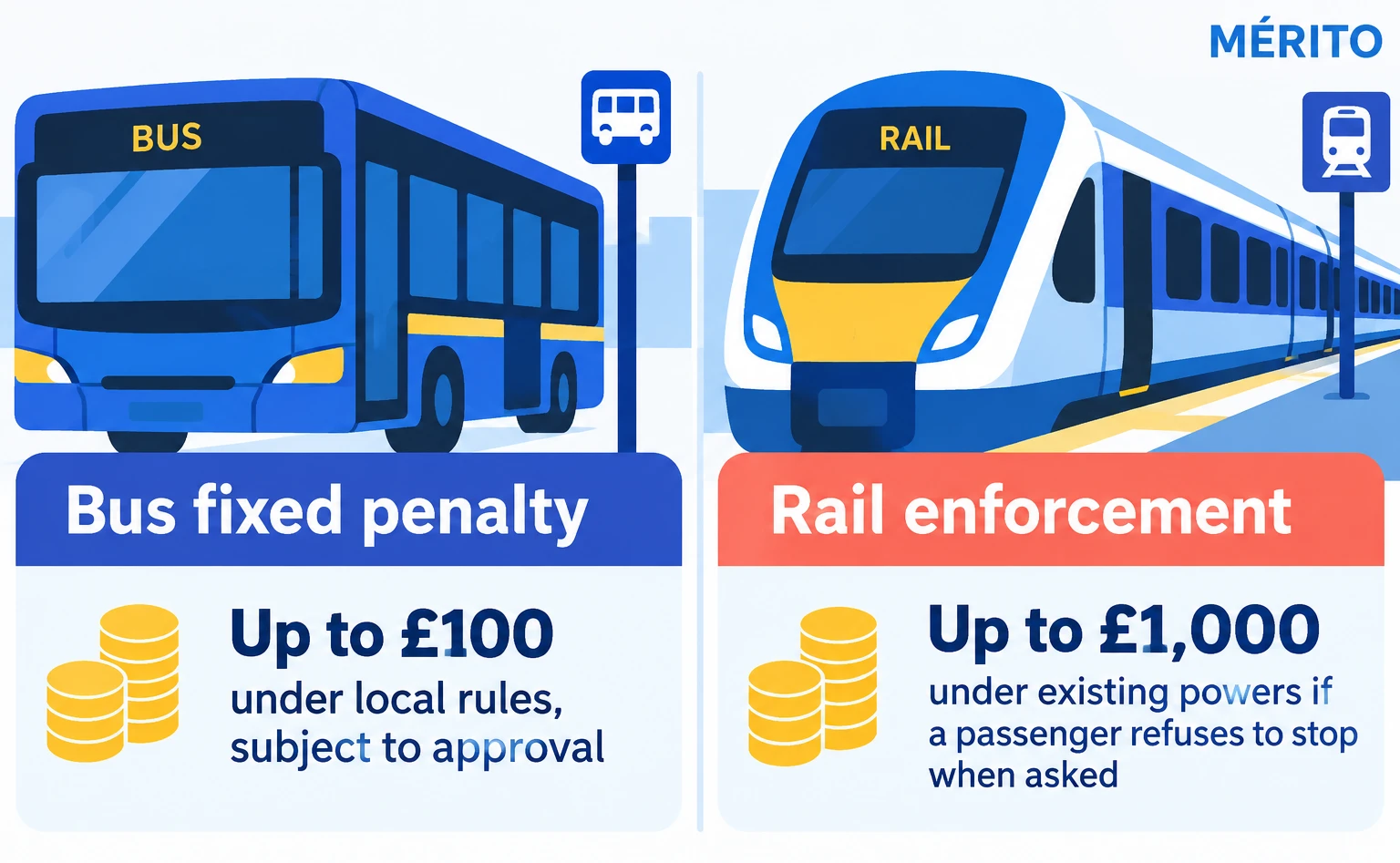
A national campaign encourages rail passengers to use headphones, while local transport authorities in England can set and enforce approved rules against nuisance behaviour on buses. Bus penalties can reach £100; on trains, passengers who refuse an authorised request to stop may be removed or face a fine of up to £1,000 under existing powers.
The bus and rail measures have separate rules and enforcement limits.
A national message for rail passengers
A national rail campaign launched on 19 October 2026 encourages passengers to use headphones and “share the carriage, not the noise”. It is intended to create a consistent message across the network, with participating operators using websites, social media, carriage notices and station announcements.
Prime Minister Andy Burnham said that people had experienced someone playing music or videos loudly on a train, which “can quickly spoil the journey”. He said the campaign was intended to remind passengers to use headphones, adding that this simple change could make journeys better for everyone.
The campaign is an awareness measure, not a new rail offence. Under existing railway powers, a passenger who refuses an authorised staff member’s request to stop may be removed from the train or face a fine of up to £1,000.
Local rules and penalties on buses
Under the Bus Services Act 2025, local transport authorities in England can make and enforce local rules addressing nuisance behaviour on buses, including loud music, littering, vaping and threatening behaviour. Fixed penalties can be up to £100.
The legal powers came into force on 5 August 2026, but individual local rules require approval by the Secretary of State before they can be enforced. Government guidance sets out how authorities can use the powers.
Bus drivers are not expected to enforce the rules. Authorised officers, including transport safety officers and police, can deal with incidents. The government’s guidance describes an approach that begins with engagement and explanation before enforcement if a passenger refuses to comply.
How enforcement is expected to work
The government’s guidance describes a three-step response for bus incidents: engage with the passenger, explain the rule and its effect on others, then take enforcement action if the person does not comply.
The enforcement arrangements differ between bus and rail services. On buses, approved local rules are to be handled by authorised officers rather than drivers; on trains, existing powers allow action when a passenger refuses a request from authorised staff.
Explore the background
Further reading
Selected background resources to explain the context and concepts behind this story.
Understand the Department for Transport’s remit and how it relates to the wider transport system.
An Overview for the Department of Transport 2024-25
The National Audit Office overview draws on its audit and value-for-money work and covers the department and partner organisations, offering institutional context for the transport powers discussed in the article.
Learn about Andy Burnham’s public role and election as Mayor of Greater Manchester.
Andy Burnham - Bennett School of Public Policy
The Cambridge profile provides brief background on Burnham’s mayoral office and terms, helping readers identify his public role without repeating the campaign announcement.
Explore an overview of the Department for Transport and cross-cutting government issues from the 2023–24 period.
An Overview of the Department for Transport for the new ...
The National Audit Office describes this as part of its series of overviews of government departments and cross-cutting issues, giving readers a broader institutional reference point for transport policy.
External links selected for their educational value. They are separate from the sources used to report this story.
Editorial transparency
Article integrity
These checks apply to the published version. Changes to its content or evidence require a fresh review.
Veracidad
Aprobado
Comprueba que la pieza tenga fuentes declaradas y verificadas, que el nivel de evidencia se presente correctamente y que el desarrollo sea suficiente para sostener sus afirmaciones.
100/100
Analizado 19/10/2026 12:22 · rules-v1
Ausencia de sesgo
Aprobado
Busca lenguaje emocional, descalificaciones, generalizaciones absolutas y una voz editorial impropia de una noticia. También comprueba atribuciones y pluralidad de fuentes cuando la materia es sensible.
100/100
Analizado 19/10/2026 12:22 · rules-v1
Ausencia de clickbait
Aprobado
Evalúa si el titular cuenta el hecho principal sin ocultarlo para provocar curiosidad, sin promesas exageradas y sin recursos tipográficos engañosos.
100/100
Analizado 19/10/2026 12:22 · rules-v1
Coherencia editorial
Aprobado
Contrasta titular, subtítulo, resumen y cuerpo para detectar contradicciones, cifras sin respaldo o un alcance mayor del que permite la información disponible.
100/100
Analizado 19/10/2026 12:22 · rules-v1
Plagio y originalidad
Aprobado
Compara la prosa con los extractos de las fuentes utilizadas y con hasta 250 publicaciones recientes de Mérito para detectar copia extensa o una reescritura demasiado cercana.
100/100
Analizado 19/10/2026 12:22 · rules-v1
Conflictos de interés
Aprobado
Analiza posibles relaciones entre la autoría, el medio y las fuentes, así como patrocinio, lenguaje promocional o dependencia exclusiva de comunicados de prensa.
100/100
Analizado 19/10/2026 12:22 · rules-v1
The score is a quality-control indicator, not a probability that something is true.