Proposed parking code sets grace periods and appeal limits
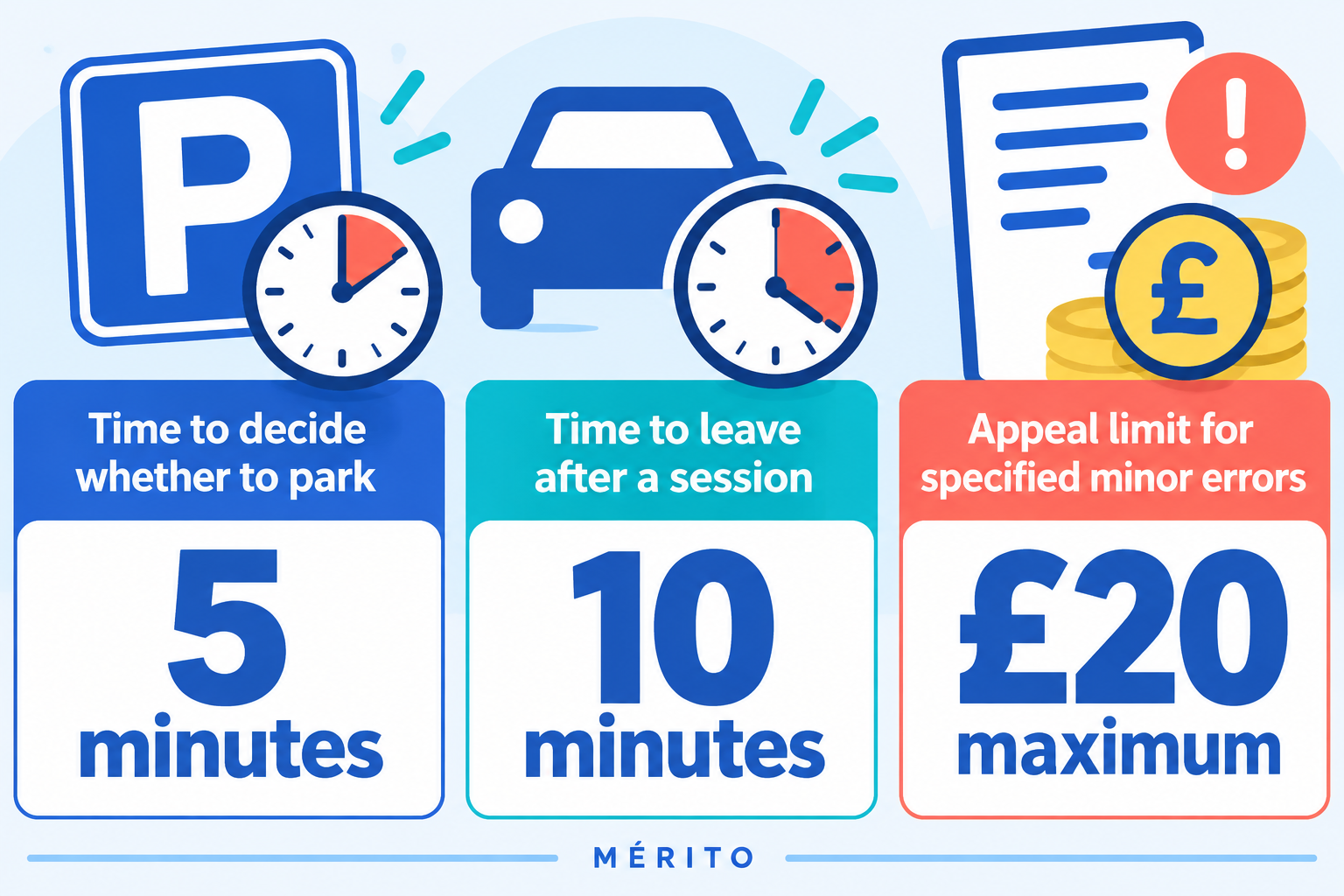
The code laid before Parliament would give drivers five minutes to decide whether to park and ten minutes to leave after a session; it is not yet in force.
A proposed Private Parking Code of Practice would introduce grace periods, appeal protections for specified mistakes and circumstances, and a £20 maximum charge on appeal for certain minor errors. The general maximum charge would remain £100. The code must undergo parliamentary scrutiny before implementation.
The code has been laid before Parliament and remains subject to scrutiny.
Grace periods and appeals
The proposed Private Parking Code of Practice would give drivers five minutes to decide whether to park and ten minutes to leave after a parking session ends before a charge can be issued. It is intended to cover private car parks in England, Scotland and Wales.
The proposal would allow charges to be cancelled on appeal in specified circumstances, including a vehicle breakdown, a medical emergency or a faulty ticket machine. It also covers certain honest mistakes, such as stopping briefly to check directions. For specified minor errors—including entering a registration incorrectly or forgetting a permit—the charge on appeal would be limited to £20. The general maximum private parking charge would remain £100.
Oversight and implementation
Under the proposed code, operators would have to report information about the charges they issue and how they handle appeals. A new independent Scrutiny and Oversight Board would examine that information; the government says the process to establish the board would begin once the code comes into force.
Operators that fail to comply risk losing access to Driver and Vehicle Licensing Agency vehicle-keeper data, which firms use to identify registered keepers and pursue charges. The code has been laid before Parliament and will be scrutinised before ministers bring it into force; it is not yet in force.
The government has also said it will consult on private parking debt-recovery fees, including whether to reduce or remove the existing £70 cap. Those fees are not abolished by the proposed code.
Explore the background
Further reading
Selected background resources to explain the context and concepts behind this story.
Understand the statutory role and operational scope of the Driver and Vehicle Licensing Agency (DVLA) within the UK transport system.
Driver and Vehicle Licensing Agency
The article mentions the DVLA as a key keyword; this reference provides a stable, encyclopedic overview of the organization's mandate, helping readers distinguish its licensing functions from the private parking enforcement context.
Analyze the historical trajectory of private parking charge volumes and enforcement practices in the UK since 2010.
History | Parking Profit System
This resource offers long-term data on ticket volumes and industry trends, providing the necessary historical baseline to understand why a new Code of Practice is being proposed to regulate the sector.
Interpret current statistical data on private parking charges, appeal success rates, and penalty levels to assess the scale of the issue.
UK Parking Fine Statistics 2026 | DVLA, POPLA & Council PCN ...
By citing primary-source data on charge volumes and POPLA win rates, this resource allows readers to quantify the impact of the proposed changes and understand the current efficacy of the appeal process.
External links selected for their educational value. They are separate from the sources used to report this story.
Editorial transparency
Article integrity
These checks apply to the published version. Changes to its content or evidence require a fresh review.
Veracidad
Aprobado
Comprueba que la pieza tenga fuentes declaradas y verificadas, que el nivel de evidencia se presente correctamente y que el desarrollo sea suficiente para sostener sus afirmaciones.
100/100
Analizado 20/10/2026 05:24 · rules-v1
Ausencia de sesgo
Aprobado
Busca lenguaje emocional, descalificaciones, generalizaciones absolutas y una voz editorial impropia de una noticia. También comprueba atribuciones y pluralidad de fuentes cuando la materia es sensible.
100/100
Analizado 20/10/2026 05:24 · rules-v1
Ausencia de clickbait
Aprobado
Evalúa si el titular cuenta el hecho principal sin ocultarlo para provocar curiosidad, sin promesas exageradas y sin recursos tipográficos engañosos.
100/100
Analizado 20/10/2026 05:24 · rules-v1
Coherencia editorial
Aprobado
Contrasta titular, subtítulo, resumen y cuerpo para detectar contradicciones, cifras sin respaldo o un alcance mayor del que permite la información disponible.
100/100
Analizado 20/10/2026 05:24 · rules-v1
Plagio y originalidad
Aprobado
Compara la prosa con los extractos de las fuentes utilizadas y con hasta 250 publicaciones recientes de Mérito para detectar copia extensa o una reescritura demasiado cercana.
100/100
Analizado 20/10/2026 05:24 · rules-v1
Conflictos de interés
Aprobado
Analiza posibles relaciones entre la autoría, el medio y las fuentes, así como patrocinio, lenguaje promocional o dependencia exclusiva de comunicados de prensa.
100/100
Analizado 20/10/2026 05:24 · rules-v1
The score is a quality-control indicator, not a probability that something is true.