Government proposes direct access route for some Child Trust Fund accounts
A suitable person could apply to providers on behalf of an adult who lacks capacity, subject to legislation and safeguards.
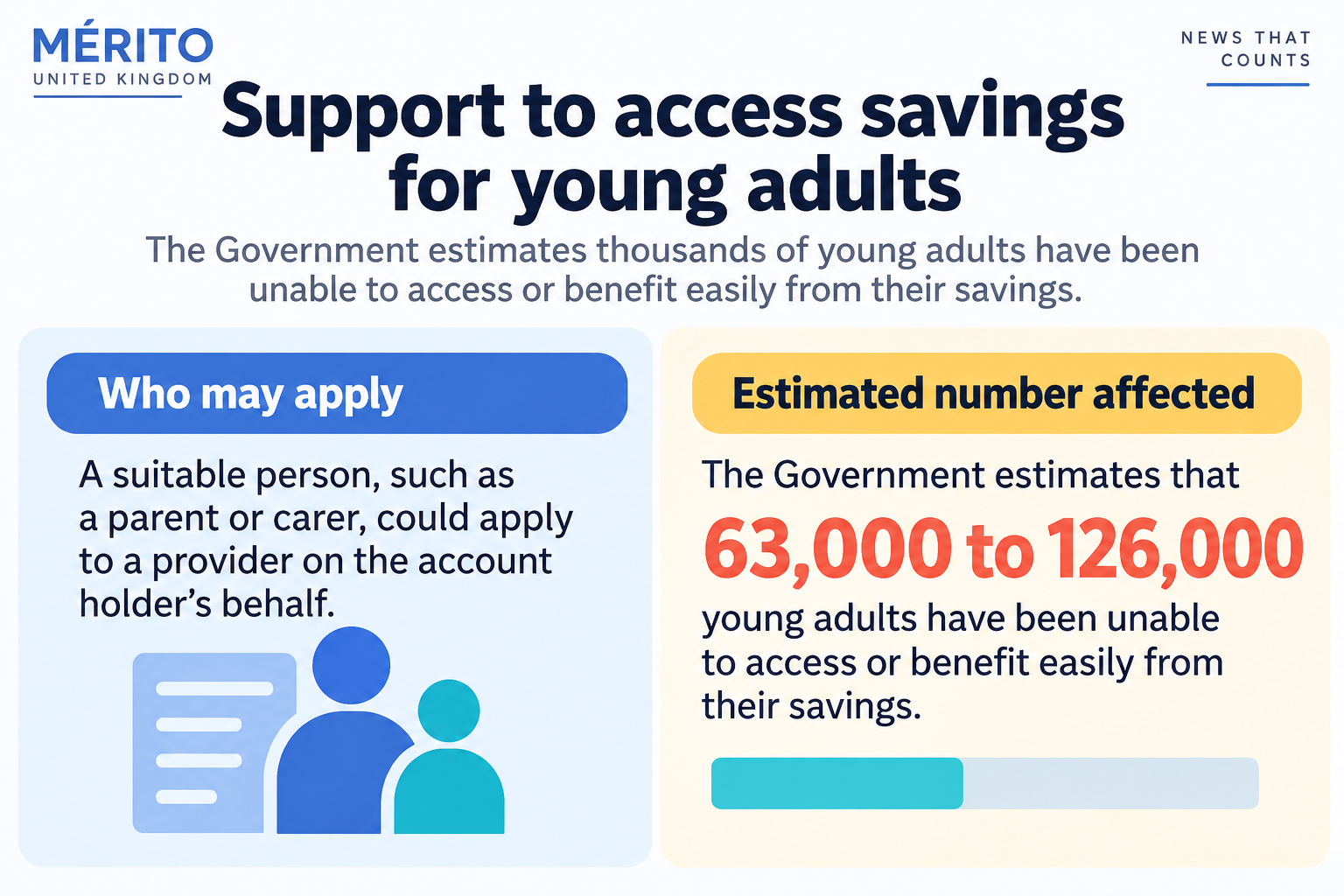
The Government has proposed a new way for suitable people, such as parents or carers, to apply to Child Trust Fund providers on behalf of adults who lack capacity to manage their finances. It estimates that 63,000 to 126,000 young adults have been unable to access or benefit easily from their savings. The plan requires parliamentary approval and further regulations; the Court of Protection would remain available. The proposal would cover England and Wales.
The proposed route would depend on legislation and safeguards still to be developed.
A proposed direct application route
The Government has proposed a scheme under which a suitable person, such as a parent or carer, could apply directly to a Child Trust Fund provider to access and manage an account for an adult who lacks the mental capacity to manage their financial affairs. The scheme is a proposal and is not yet in force.
The Government estimates that 63,000 to 126,000 young adults have not been able to access or benefit easily from money set aside for them. The parliamentary statement says that, under current arrangements, families may need to obtain a court order to access funds when an account holder turns 18 and lacks capacity. The proposed route is intended to offer an additional way for suitable people to act on the account holder’s behalf.
How the scheme would be developed
The Government says it will work with campaigners, disability charities and financial-services providers to design the process. The work will consider who may apply, what evidence providers should require and what safeguards are proportionate to protect account holders.
The parliamentary statement says the scheme would follow the principles of the Mental Capacity Act 2005 on capacity and best interests. The Government plans to bring forward an amendment to the Financial Services and Markets Bill; parliamentary approval and subsequent secondary legislation are required before the scheme can be established. Further details are to be set out as the legislation progresses.
Background and territorial scope
Child Trust Funds were created in 2005 to give eligible children a financial asset at the start of adulthood. Around 6.3 million accounts were opened. The parliamentary statement says the original arrangements did not specify how funds could be accessed when an account holder turned 18 and lacked the mental capacity to manage their financial affairs.
The proposed scheme would not remove the Court of Protection route: applications would remain available to protect the financial interests of adults who lack capacity. The proposed scheme would cover England and Wales only; the parliamentary statement says Scotland and Northern Ireland have their own processes.
Explore the background
Further reading
Selected background resources to explain the context and concepts behind this story.
Understand the legal framework of mental capacity and how it applies to financial decisions for adults lacking capacity.
The Mental Capacity Act 2005 document provides official legislative details and post‑legislative scrutiny, essential for grasping the statutory basis of the Court of Protection and related financial provisions.
Explore the interaction between the Court of Protection and deprivation of liberty cases, informing how financial access may be regulated.
Mental Capacity and Deprivation of Liberty
This consultation paper from Family Law outlines the Court of Protection’s powers under the Mental Capacity Act, offering authoritative context for how financial decisions are managed when capacity is absent.
Compare the UK mental capacity legal system with broader European frameworks to contextualise domestic reforms.
Comparative Study on the legal systems of the protection of ...
The European Parliament study examines the Mental Capacity Act 2005 within a comparative legal context, providing official analysis that helps readers see how UK provisions fit into wider European standards.
External links selected for their educational value. They are separate from the sources used to report this story.
Editorial transparency
Article integrity
These checks apply to the published version. Changes to its content or evidence require a fresh review.
Veracidad
Aprobado
Comprueba que la pieza tenga fuentes declaradas y verificadas, que el nivel de evidencia se presente correctamente y que el desarrollo sea suficiente para sostener sus afirmaciones.
100/100
Analizado 03/11/2026 14:25 · rules-v1
Ausencia de sesgo
Aprobado
Busca lenguaje emocional, descalificaciones, generalizaciones absolutas y una voz editorial impropia de una noticia. También comprueba atribuciones y pluralidad de fuentes cuando la materia es sensible.
100/100
Analizado 03/11/2026 14:25 · rules-v1
Ausencia de clickbait
Aprobado
Evalúa si el titular cuenta el hecho principal sin ocultarlo para provocar curiosidad, sin promesas exageradas y sin recursos tipográficos engañosos.
100/100
Analizado 03/11/2026 14:25 · rules-v1
Coherencia editorial
Aprobado
Contrasta titular, subtítulo, resumen y cuerpo para detectar contradicciones, cifras sin respaldo o un alcance mayor del que permite la información disponible.
100/100
Analizado 03/11/2026 14:25 · rules-v1
Plagio y originalidad
Aprobado
Compara la prosa con los extractos de las fuentes utilizadas y con hasta 250 publicaciones recientes de Mérito para detectar copia extensa o una reescritura demasiado cercana.
100/100
Analizado 03/11/2026 14:25 · rules-v1
Conflictos de interés
Aprobado
Analiza posibles relaciones entre la autoría, el medio y las fuentes, así como patrocinio, lenguaje promocional o dependencia exclusiva de comunicados de prensa.
100/100
Analizado 03/11/2026 14:25 · rules-v1
The score is a quality-control indicator, not a probability that something is true.