Sir Mark Rowley sets out proposals for policing reform in Manchester speech
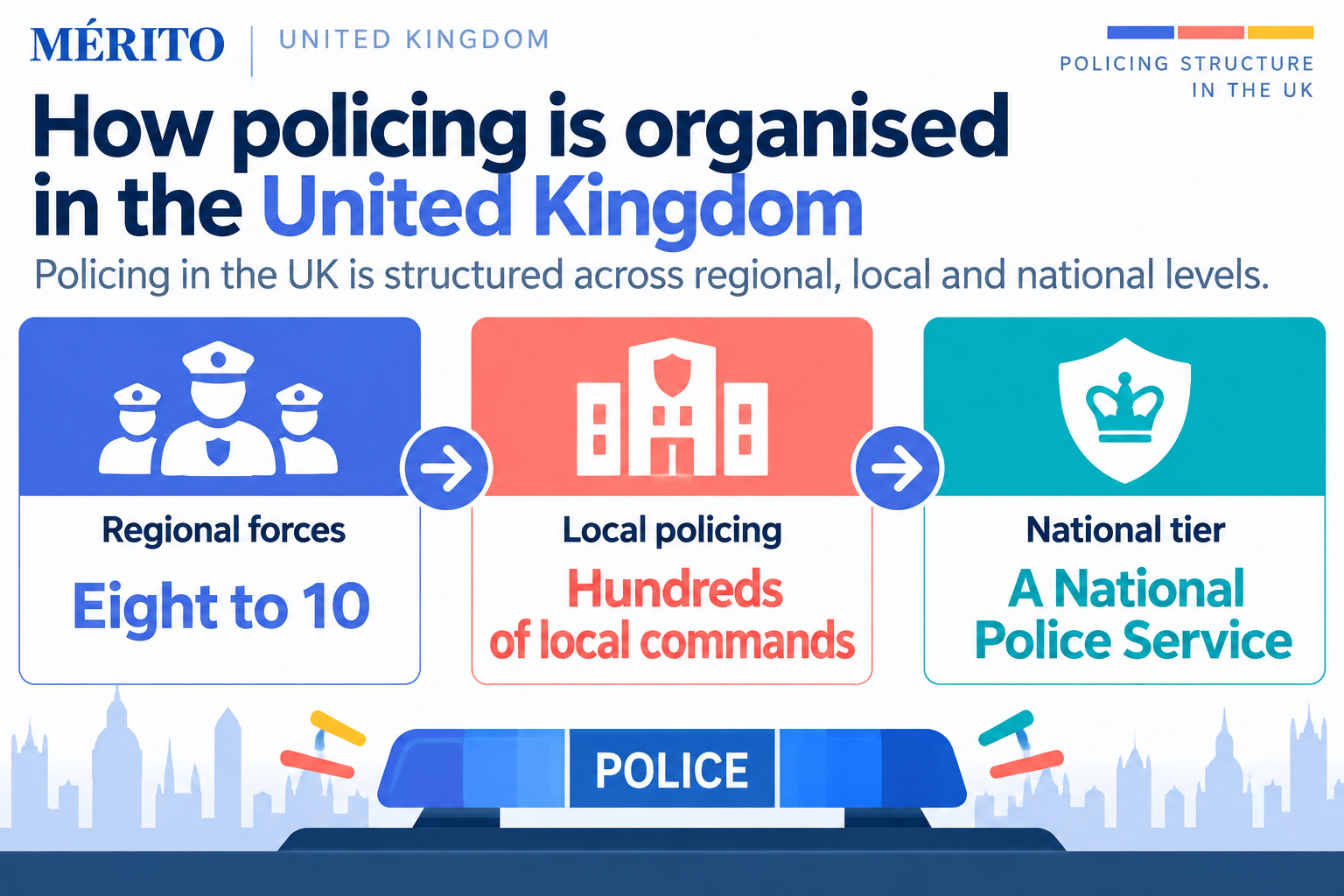
The Metropolitan Police Commissioner advocated eight to 10 regional forces, local policing commands and a National Police Service for England and Wales.
In a speech in Manchester on 6 November, Sir Mark Rowley argued for a three-tier policing structure in England and Wales, replacing the existing 43-force model with regional forces, local commands and a National Police Service. He said the structure should better match the cross-border nature of serious crime and could reduce duplicated functions.
The proposals formed part of Rowley’s speech in Manchester on 6 November.
A three-tier proposal
Metropolitan Police Commissioner Sir Mark Rowley argued for structural reform in a speech in Manchester on 6 November 2026. He said policing in England and Wales needed to adapt to crime that operates across regional and national borders.
Rowley proposed replacing the current 43-force structure with eight to 10 regional forces, supported by hundreds of local policing commands and a National Police Service. Local commands would focus on neighbourhood policing, while regional and national tiers would provide specialist capacity and deal with more serious crimes.
He argued that organised crime, fraud, online child abuse, cybercrime and hostile states operate across borders, while police forces remain organised largely around local areas. Rowley said that without reform policing faced a choice between significant change and a decline in services.
Funding and the case for change
Rowley said the proposed reorganisation could reduce duplicated work across forces and allow resources to be redirected to frontline services. These were arguments for the proposal, rather than evidence that restructuring would necessarily deliver those outcomes.
He also cited a fall in police funding in England and Wales from about 0.9% to 0.7% of GDP since 2010. He presented the funding figure alongside his case for structural change and additional investment, arguing that extra money alone would not resolve what he described as fundamental organisational problems.
Explore the background
Further reading
Selected background resources to explain the context and concepts behind this story.
Understand the historical trajectory and structural changes of policing in England and Wales since 2010.
Police reform in England and Wales
This UK Parliament publication provides an official overview of past reforms, including the shift to Police and Crime Commissioners and the creation of national bodies, which is essential context for evaluating Sir Mark Rowley's proposed three-tier structure.
Analyze the academic and theoretical frameworks surrounding the evolution of policing models.
Policing: past, present, and future
As a scholarly work from the London School of Economics, this resource offers a critical perspective on the past, present, and future of policing, helping readers understand the broader criminological debates that inform current reform proposals.
Identify the official documentation and record-keeping standards associated with the Metropolitan Police Service.
Operational Selection Policy 29 Metropolitan Police Service ...
This National Archives policy document serves as a stable reference for how the Met manages its operational records, providing insight into the administrative infrastructure that any policing reform would need to address or integrate.
External links selected for their educational value. They are separate from the sources used to report this story.
Editorial transparency
Article integrity
These checks apply to the published version. Changes to its content or evidence require a fresh review.
Veracidad
Aprobado
Comprueba que la pieza tenga fuentes declaradas y verificadas, que el nivel de evidencia se presente correctamente y que el desarrollo sea suficiente para sostener sus afirmaciones.
100/100
Analizado 06/11/2026 11:33 · rules-v1
Ausencia de sesgo
Aprobado
Busca lenguaje emocional, descalificaciones, generalizaciones absolutas y una voz editorial impropia de una noticia. También comprueba atribuciones y pluralidad de fuentes cuando la materia es sensible.
100/100
Analizado 06/11/2026 11:33 · rules-v1
Ausencia de clickbait
Aprobado
Evalúa si el titular cuenta el hecho principal sin ocultarlo para provocar curiosidad, sin promesas exageradas y sin recursos tipográficos engañosos.
100/100
Analizado 06/11/2026 11:33 · rules-v1
Coherencia editorial
Aprobado
Contrasta titular, subtítulo, resumen y cuerpo para detectar contradicciones, cifras sin respaldo o un alcance mayor del que permite la información disponible.
100/100
Analizado 06/11/2026 11:33 · rules-v1
Plagio y originalidad
Aprobado
Compara la prosa con los extractos de las fuentes utilizadas y con hasta 250 publicaciones recientes de Mérito para detectar copia extensa o una reescritura demasiado cercana.
100/100
Analizado 06/11/2026 11:33 · rules-v1
Conflictos de interés
Aprobado
Analiza posibles relaciones entre la autoría, el medio y las fuentes, así como patrocinio, lenguaje promocional o dependencia exclusiva de comunicados de prensa.
100/100
Analizado 06/11/2026 11:33 · rules-v1
The score is a quality-control indicator, not a probability that something is true.