McFadden says some people may receive less under future benefits system
The work and pensions secretary called for a reset in support for young people not in education, employment or training ahead of Alan Milburn’s review.
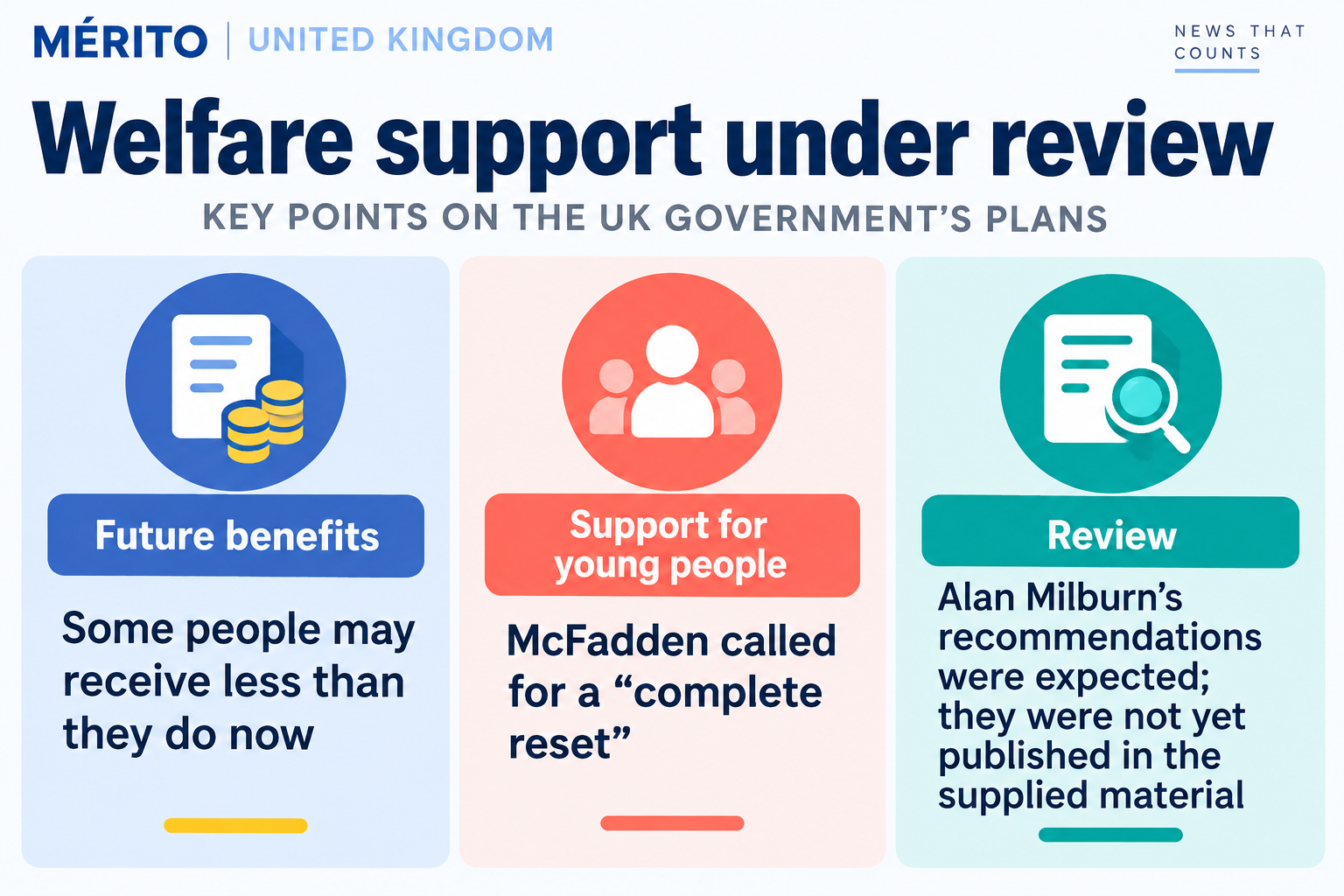
Pat McFadden said some people may receive less than they do now under a future system, as the government prepares to consider Alan Milburn’s review of youth inactivity. The review was expected to set out recommendations, not confirmed policy.
McFadden’s remarks and the forthcoming review concern support for young people outside education, employment or training.
McFadden calls for a reset in youth support
Work and Pensions Secretary Pat McFadden said some people may receive less under a future benefits system, while calling for a “complete reset” to help young people not in education, employment or training.
Speaking before Alan Milburn’s review was due to be published, McFadden said people would move to a new system when reassessed. He added that reassessments already take place under the current system.
McFadden said the government needed to change its approach because young people who move onto long-term sickness benefits can remain on them for years without securing steady work. He argued that reform was needed because of Labour’s values, rather than despite them.
Milburn review was still forthcoming
The review led by former health secretary Alan Milburn was expected to make recommendations on young people outside education, employment or training. The supplied material did not include the completed review, so its reported proposals should not be treated as government policy.
The government had previously announced an investigation into the causes of youth inactivity, with a call for evidence and an advisory panel intended to inform Milburn’s recommendations. Its stated aim was to help young people into education, employment or training.
In remarks ahead of the review, Milburn said addressing the problem would require sustained investment and could take a decade to bring the benefits bill down to a “reasonable level”. He warned against relying on abrupt cuts, saying young people could instead appear elsewhere in government spending.
Explore the background
Further reading
Selected background resources to explain the context and concepts behind this story.
Understand approaches used in youth employment partnerships and how national support programmes are reviewed.
WHAT WORKS IN YOUTH EMPLOYMENT PARTNERSHIPS
The collection focuses on youth employment partnerships and includes a review of national support programmes, offering context for the article’s discussion of support for young people outside education, employment or training.
Explore how labour-market outcomes, welfare reform and inequality have been analysed in the United Kingdom.
Labour Market, Welfare Reform and Inequality in the ...
This OECD report addresses labour-market conditions, welfare reform and inequality in the UK, providing broader policy context for proposals that could change benefit levels.
Learn how a specific UK welfare reform bill proceeded through Parliament and how Lords amendments were documented.
Welfare Reform and Work Bill 2015-16: Lords amendments
This parliamentary briefing concerns the Welfare Reform and Work Bill 2015–16, giving readers an example of how welfare proposals can move through the legislative process; it does not describe the review in the article.
Understand principles and practices discussed in research on systems-change interventions in youth employment support.
What works in systems change interventions A review of ...
The summary examines England’s youth employment support system and effective approaches to changing it, adding a systems-level perspective to the article’s call for a reset.
External links selected for their educational value. They are separate from the sources used to report this story.
Editorial transparency
Article integrity
These checks apply to the published version. Changes to its content or evidence require a fresh review.
Veracidad
Aprobado
Comprueba que la pieza tenga fuentes declaradas y verificadas, que el nivel de evidencia se presente correctamente y que el desarrollo sea suficiente para sostener sus afirmaciones.
100/100
Analizado 16/11/2026 03:08 · rules-v1
Ausencia de sesgo
Aprobado
Busca lenguaje emocional, descalificaciones, generalizaciones absolutas y una voz editorial impropia de una noticia. También comprueba atribuciones y pluralidad de fuentes cuando la materia es sensible.
100/100
Analizado 16/11/2026 03:08 · rules-v1
Ausencia de clickbait
Aprobado
Evalúa si el titular cuenta el hecho principal sin ocultarlo para provocar curiosidad, sin promesas exageradas y sin recursos tipográficos engañosos.
100/100
Analizado 16/11/2026 03:08 · rules-v1
Coherencia editorial
Aprobado
Contrasta titular, subtítulo, resumen y cuerpo para detectar contradicciones, cifras sin respaldo o un alcance mayor del que permite la información disponible.
100/100
Analizado 16/11/2026 03:08 · rules-v1
Plagio y originalidad
Aprobado
Compara la prosa con los extractos de las fuentes utilizadas y con hasta 250 publicaciones recientes de Mérito para detectar copia extensa o una reescritura demasiado cercana.
100/100
Analizado 16/11/2026 03:08 · rules-v1
Conflictos de interés
Aprobado
Analiza posibles relaciones entre la autoría, el medio y las fuentes, así como patrocinio, lenguaje promocional o dependencia exclusiva de comunicados de prensa.
100/100
Analizado 16/11/2026 03:08 · rules-v1
The score is a quality-control indicator, not a probability that something is true.