PHP security flaws prompt urgent updates and precautionary website takedowns
Cyber agencies urged organisations to patch affected systems or take them offline while they were being secured.
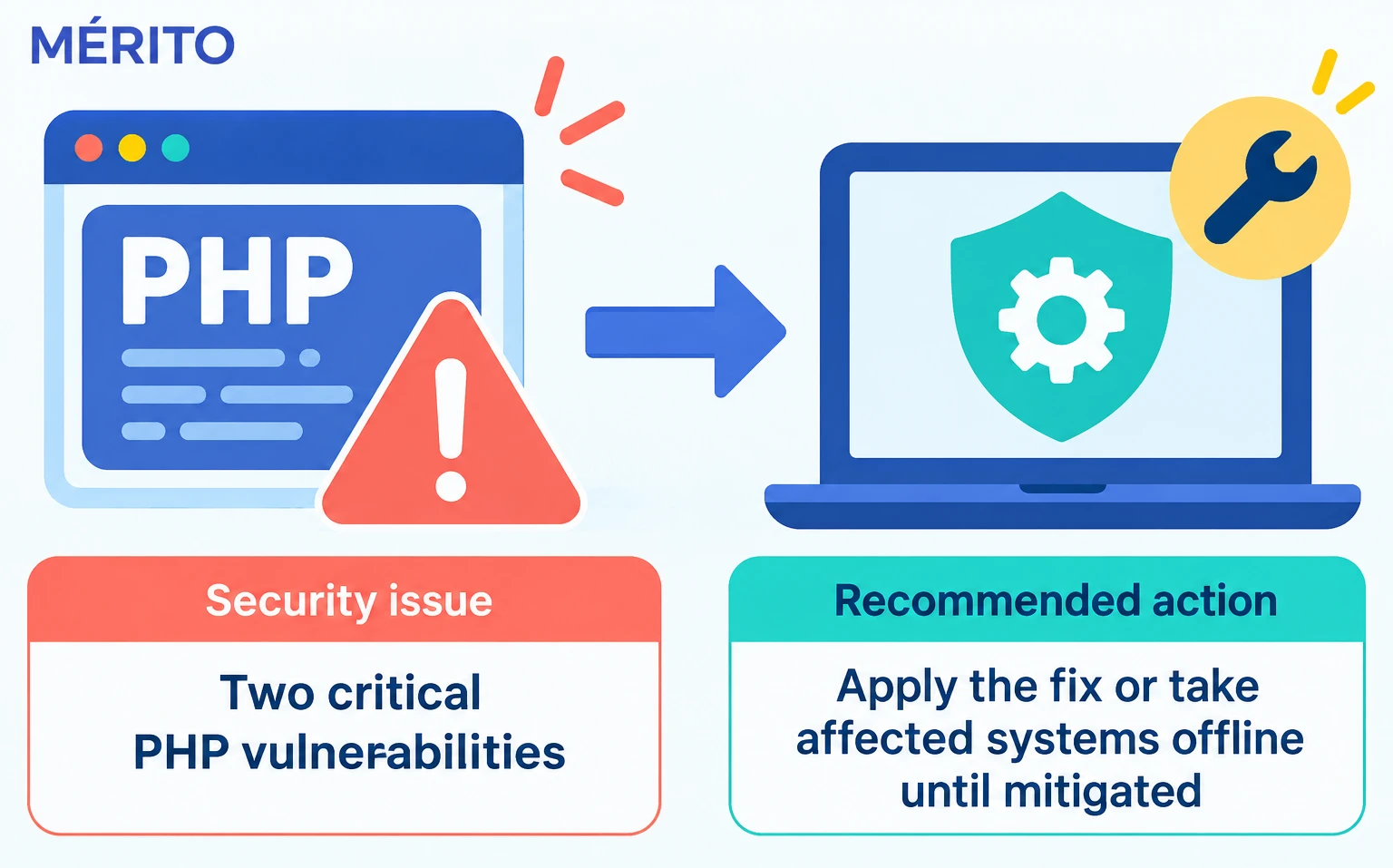
Two critical vulnerabilities in PHP led cyber-security agencies to urge organisations to install fixes and consider taking vulnerable systems offline. Public bodies in several countries reported precautionary service disruptions as patches and mitigations were put in place.
Cyber agencies urged organisations to install the PHP fixes and mitigate systems that could not be updated immediately.
Security updates and guidance
The PHP Foundation issued fixes for two critical vulnerabilities in the widely used programming language. The UK National Cyber Security Centre and other cyber agencies urged organisations to apply the updates promptly; where immediate remediation was not possible, they advised taking affected systems offline until they could be secured.
The US National Security Agency warned that the vulnerabilities could provide a route to a server’s file system or database. The NCSC also advised organisations to monitor for further updates, including those for third-party products that bundle PHP.
Public bodies take precautionary action
Several public bodies reported disruption as they addressed the vulnerabilities. Finland’s government temporarily shut down public web services, while the City of Edinburgh Council and the BBC took some pages offline. The Netherlands’ cyber-security agency and other Dutch public institutions also reported taking websites offline as a precaution.
The Office for Budget Responsibility said it had taken its website offline in view of the PHP security issues. A UK Government spokesperson said work was under way across government to identify and patch potential exposure, and that any effect on online services was expected to be minimal.
Discovery and scope
The vulnerabilities were discovered by researchers at cyber-security firms Calif and Wiz, with the discovery made during work involving advanced AI tools. The PHP Foundation and OpenAI were involved in preparing fixes, and the Foundation issued updates after details of the vulnerabilities became public.
PHP is used in web servers and platforms including WordPress and Magento. Estimates of how much of the internet relies on PHP vary, and the available reporting does not establish a definitive share.
Explore the background
Further reading
Selected background resources to explain the context and concepts behind this story.
Understand the fundamental architecture and security considerations of the PHP scripting language.
PHP: Preface - Manual
The official PHP Manual provides the foundational technical context for understanding why vulnerabilities in the language core are critical, detailing how PHP is installed and its general security considerations.
Identify the mandate and operational role of the UK's primary cyber security authority.
National Cyber Security Centre - GOV.UK
The GOV.UK profile for the National Cyber Security Centre explains its function as the bridge between industry and government, clarifying why its advisories carry significant weight for public bodies and organisations.
Comprehend the administrative hierarchy and service delivery structure of a major UK local authority.
Council management structure – The City of Edinburgh Council
The City of Edinburgh Council's management structure page illustrates how elected members and executive officers coordinate services, providing context for how a local government body might implement precautionary service disruptions during a security incident.
Review the methodology and findings of a comprehensive security audit for the PHP codebase.
PHP-SRC audit
The PHP-SRC audit report from the PHP Foundation offers a stable, technical reference on how the project identifies and addresses security flaws, complementing the news of urgent updates with deeper insight into the project's security practices.
External links selected for their educational value. They are separate from the sources used to report this story.
Editorial transparency
Article integrity
These checks apply to the published version. Changes to its content or evidence require a fresh review.
Veracidad
Aprobado
Comprueba que la pieza tenga fuentes declaradas y verificadas, que el nivel de evidencia se presente correctamente y que el desarrollo sea suficiente para sostener sus afirmaciones.
100/100
Analizado 22/10/2026 08:30 · rules-v1
Ausencia de sesgo
Aprobado
Busca lenguaje emocional, descalificaciones, generalizaciones absolutas y una voz editorial impropia de una noticia. También comprueba atribuciones y pluralidad de fuentes cuando la materia es sensible.
100/100
Analizado 22/10/2026 08:30 · rules-v1
Ausencia de clickbait
Aprobado
Evalúa si el titular cuenta el hecho principal sin ocultarlo para provocar curiosidad, sin promesas exageradas y sin recursos tipográficos engañosos.
100/100
Analizado 22/10/2026 08:30 · rules-v1
Coherencia editorial
Aprobado
Contrasta titular, subtítulo, resumen y cuerpo para detectar contradicciones, cifras sin respaldo o un alcance mayor del que permite la información disponible.
100/100
Analizado 22/10/2026 08:30 · rules-v1
Plagio y originalidad
Aprobado
Compara la prosa con los extractos de las fuentes utilizadas y con hasta 250 publicaciones recientes de Mérito para detectar copia extensa o una reescritura demasiado cercana.
100/100
Analizado 22/10/2026 08:30 · rules-v1
Conflictos de interés
Aprobado
Analiza posibles relaciones entre la autoría, el medio y las fuentes, así como patrocinio, lenguaje promocional o dependencia exclusiva de comunicados de prensa.
100/100
Analizado 22/10/2026 08:30 · rules-v1
The score is a quality-control indicator, not a probability that something is true.