Thousands attend Portadown parade in support of Orange Order members
The 24 October event included a town-centre procession and rally amid the continuing dispute over the halted Drumcree march.
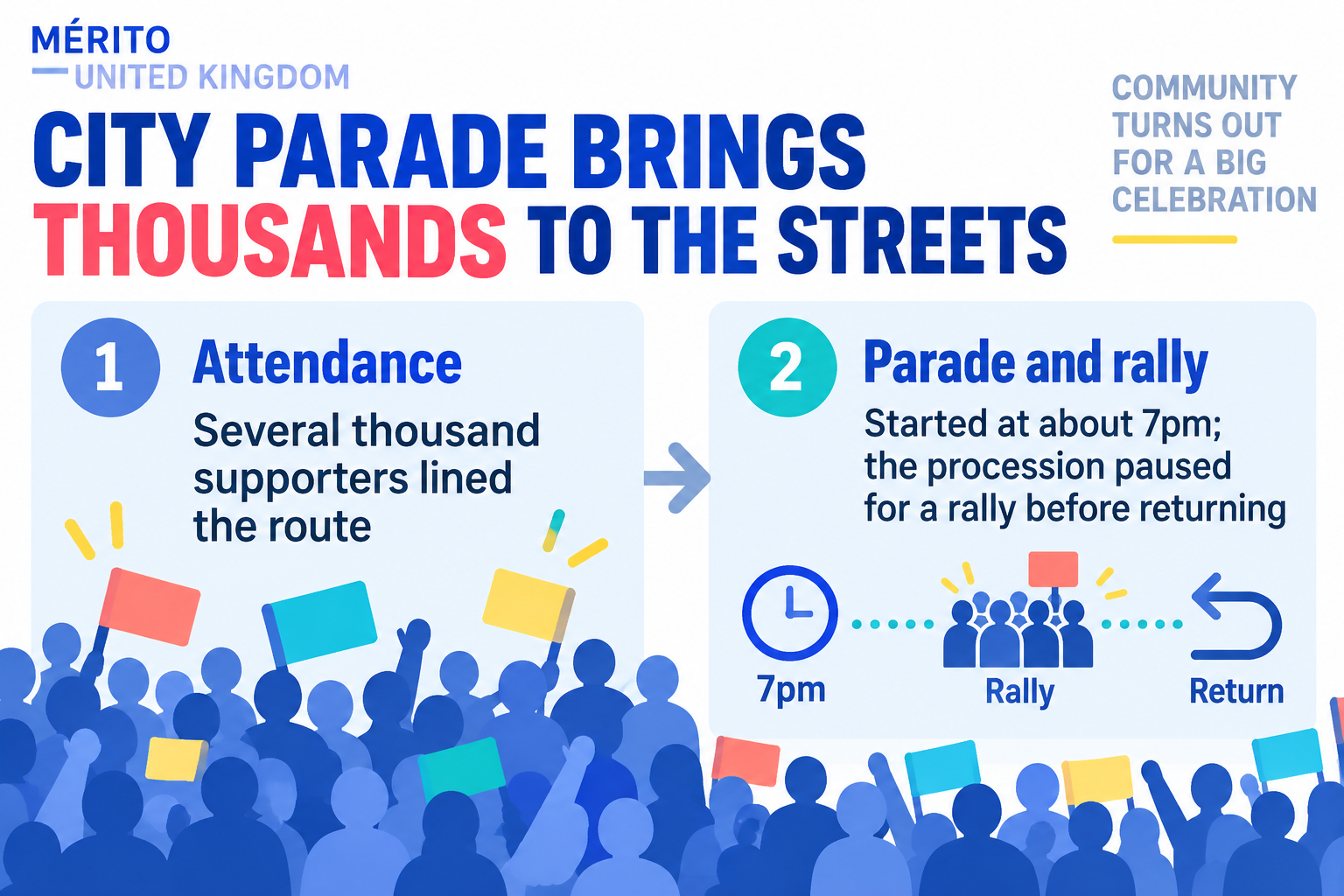
Several thousand supporters gathered in Portadown on 24 October for a parade and rally backing the Portadown District Orange Order members. The procession began at about 7pm, followed a route through the town centre and paused for speeches before returning. The gathering came as legal proceedings challenged the decision to stop a separate march along Garvaghy Road.
The parade brought several thousand supporters into Portadown as the Orange Order’s challenge over the separate Drumcree march continued.
A town-centre parade and rally
Several thousand people gathered in Portadown on Saturday 24 October for a parade and rally supporting members of the Portadown District Orange Order amid the Drumcree dispute. Hundreds of Orangemen and more than 25 bands took part, with supporters watching along the route.
The procession began at about 7pm, travelling from Watson Street through Bridge Street, High Street, Market Street, Church Street, Mandeville Street and West Street. It paused for a rally before the return leg. Carla Lockhart, the DUP MP for Upper Bann, and other political figures attended; speeches included calls for First Minister Michelle O’Neill to resign.
The dispute behind the gathering
The rally was held in support of Portadown District members seeking to complete a separate Orange Order march from Drumcree Church along Garvaghy Road. The Parades Commission had allowed that procession to go ahead with restrictions, but it did not take place after people gathered to block the road.
After a stand-off lasting almost two weeks, Northern Ireland Secretary Chris Bryant halted the procession. The Orange Order subsequently pursued a judicial review of that decision. The support parade in Portadown was a separate event; it did not itself complete the contested Garvaghy Road route.
Explore the background
Further reading
Selected background resources to explain the context and concepts behind this story.
Understand the legal and political framework governing parade disputes in Northern Ireland, including the role of the Parades Commission and judicial review.
STRATEGIC REVIEW OF PARADING IN NORTHERN ...
This strategic review provides academic and policy context on the mechanics of parading disputes, explaining how judicial review is used to challenge Commission decisions, which is central to the current legal proceedings mentioned in the article.
Gain insight into the historical legal precedents and specific procedural conflicts involving the Portadown Loyal Orange Lodge and parade routes.
House of Lords - In re Duffy (FC) (Appellant) ( ...
As a House of Lords judgment, this document offers a high-level legal perspective on the long-standing conflict, detailing specific notices and legal arguments that have shaped the current dispute over Garvaghy Road.
Examine primary historical records regarding the Orange Order's stance on negotiations with Garvaghy Road residents.
2021/99/9 Creator(s): Department of the ...
This archived transcript from the Northern Ireland Assembly provides direct historical evidence of the Orange Order's refusal to meet with residents, helping to explain the deep-seated tensions that persist in the current parade dispute.
Define the legal concept of judicial review and its application as a public law remedy in the context of Northern Ireland policing and human rights.
Human Rights Annual Report 2011
The Human Rights Annual Report offers a clear, official definition of judicial review, enabling readers to understand the specific legal mechanism the Orange Order is employing to challenge the decision to stop the Drumcree march.
External links selected for their educational value. They are separate from the sources used to report this story.
Editorial transparency
Article integrity
These checks apply to the published version. Changes to its content or evidence require a fresh review.
Veracidad
Aprobado
Comprueba que la pieza tenga fuentes declaradas y verificadas, que el nivel de evidencia se presente correctamente y que el desarrollo sea suficiente para sostener sus afirmaciones.
100/100
Analizado 25/10/2026 02:39 · rules-v1
Ausencia de sesgo
Aprobado
Busca lenguaje emocional, descalificaciones, generalizaciones absolutas y una voz editorial impropia de una noticia. También comprueba atribuciones y pluralidad de fuentes cuando la materia es sensible.
100/100
Analizado 25/10/2026 02:39 · rules-v1
Ausencia de clickbait
Aprobado
Evalúa si el titular cuenta el hecho principal sin ocultarlo para provocar curiosidad, sin promesas exageradas y sin recursos tipográficos engañosos.
100/100
Analizado 25/10/2026 02:39 · rules-v1
Coherencia editorial
Aprobado
Contrasta titular, subtítulo, resumen y cuerpo para detectar contradicciones, cifras sin respaldo o un alcance mayor del que permite la información disponible.
100/100
Analizado 25/10/2026 02:39 · rules-v1
Plagio y originalidad
Aprobado
Compara la prosa con los extractos de las fuentes utilizadas y con hasta 250 publicaciones recientes de Mérito para detectar copia extensa o una reescritura demasiado cercana.
100/100
Analizado 25/10/2026 02:39 · rules-v1
Conflictos de interés
Aprobado
Analiza posibles relaciones entre la autoría, el medio y las fuentes, así como patrocinio, lenguaje promocional o dependencia exclusiva de comunicados de prensa.
100/100
Analizado 25/10/2026 02:39 · rules-v1
The score is a quality-control indicator, not a probability that something is true.